While London residents travelled the shortest distance and made the fewest trips last year, they topped the poll for four specific modes of travel.
The figures are extracted from the 2021 National Travel Survey (NTS), an annual household survey of personal travel, published by the DfT on 31 August.
The NTS shows that the average number of trips made by people living in England in 2021 remained considerably lower than pre-pandemic levels.
The survey shows that the overall number of trips made by people last year was similar to 2020, but 21% lower than in 2019, with 757 trips made on average in 2021.
In terms of average miles travelled (4,329 miles per person) this remained at a similar level to 2020 – but 33% lower than 2019. The 2021 figure is the lowest on record.
London-specific data
The 2021 NTS shows that London residents travelled the shortest distance (on average 3,369 miles per person) and made the fewest trips (682 trips per person).
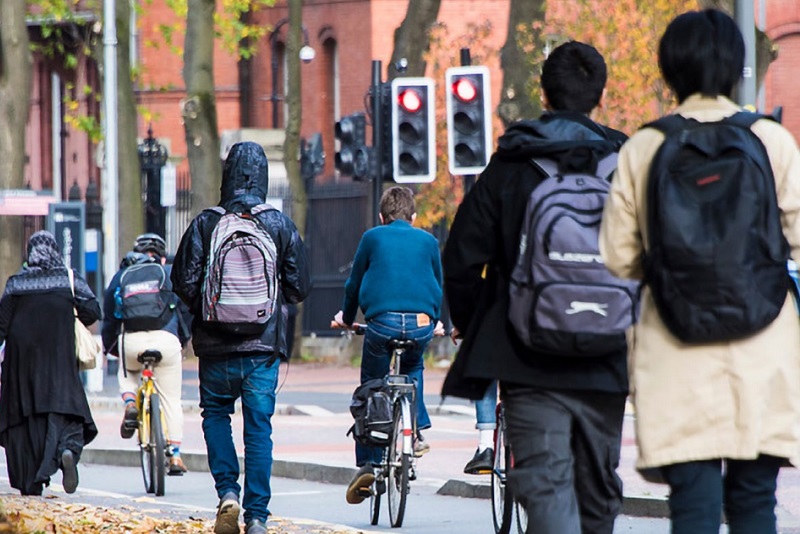
However, when it comes to active travel, residents in London made the most walking trips on average with 267 trips per person, and the most cycling trips (26 per person).
With regard to public transport, the highest average number of bus trips (56 per person) and rail trips (34 per person) were completed by London residents.
Longer term trends across England
From the early 1970s to the early 2000s, the average distance people travelled per year increased, but the number of trips and time spent travelling stayed broadly the same.
Since then, the number of miles travelled on average has gradually declined – but the average number of trips per person and hours spent travelling have remained broadly stable.
In 2020 there was a sharp decline in average miles, trips and hours travelled compared to 2019, due to travel restrictions imposed as a result of the COVID-19 pandemic.
2021 NTS and COVID-19
The DfT says the COVID-19 pandemic has ‘affected the operation of this survey’.
Fieldwork for the NTS 2021 survey continued to be impacted by the coronavirus restrictions from March 2020, with data collection interviews being conducted via telephone instead of face-to-face.
Response rates to the survey in 2021 were halfway between 2019 levels (14,356 individuals) and 2020 levels (6,239 individuals) with 9,971 individuals participating.
Consequently, the DfT says ‘caution is needed when interpreting the results for 2020 and 2021 as they are likely to be less representative of residents of England compared to previous years’.
5 September 2022