A new study by a group of Australian researchers has concluded that road networks in busy cities such as London are not conducive to higher levels of walking and cycling.
The study, first published in The Lancet and covered in an article on the Transport Xtra website, examines ways in which cities can encourage a higher uptake of active travel.
The researchers suggest that in a ‘highly motorised city’ such as London, increasing levels of walking and cycling would lead to more collisions and casualties. The study says that to improve safety, there needs to be better segregation between different types of road user.
One of the report’s key recommendations is cutting levels of commuting by car by dispersing jobs and increasing population density in cities which, the study says, would increase active travel and improve levels of air pollution and public health.
After modelling the health impacts of planning and transport policies, the report suggests that if population density was increased by a third, at least 35% of distances travelled by pedestrians and cyclists in London would need to be segregated from motorised traffic if additional deaths and injuries were to be avoided.
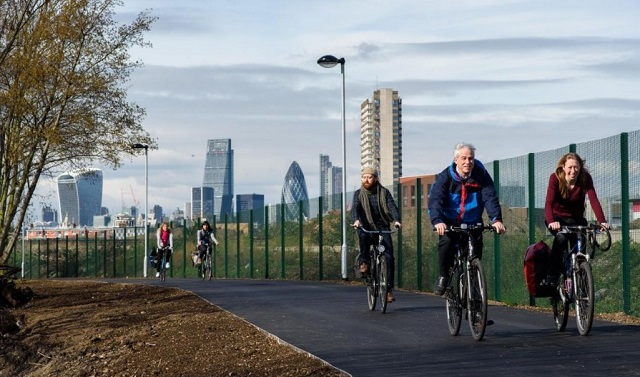
TfL is currently introducing a number of Cycle Superhighways (CS) and quietways (pictured) across the capital. Last month it announced it is to proceed with CS6 after receiving ‘majority support’ in a public consultation about the route.
Professor Stevenson, who led the research, said: “The findings suggest that government policies need to actively pursue land-use elements – particularly a focus towards compact cities – that support a modal shift away from private motor vehicles towards walking, cycling, and low-emission public transport.
“At the same time, these policies need to ensure the provision of safe walking and cycling infrastructure.”
3 October 2016